Keep the Colors Wet - Why It's All About Emotion
Aug 31, 2026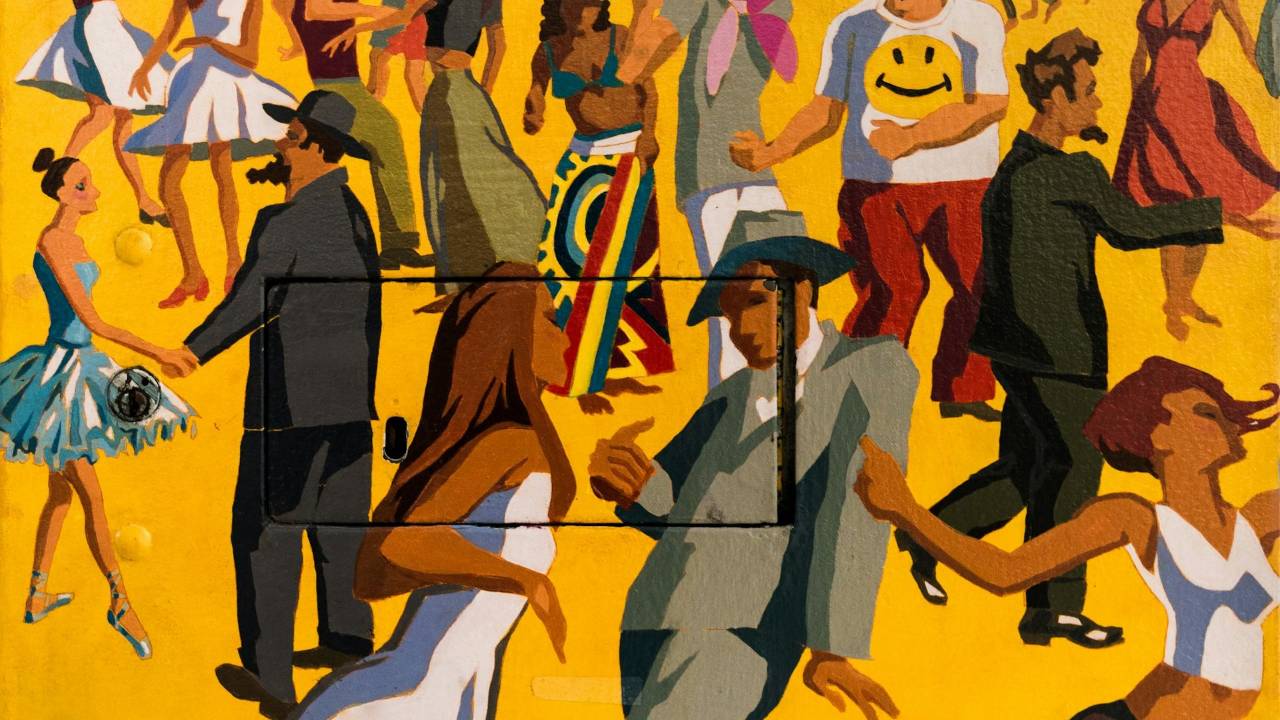
Our Drive to Learn & Create
Leave behind the ho-hums, drabs and grays. Human beings are built to expand.
We learn to walk and immediately want to go farther.
We learn to speak and begin asking questions.
We master one skill and become interested in another.
We cross streets, borders, oceans, disciplines, and generations in search of what we haven't yet experienced, understood, or become.
Reaching beyond where we are is part of the package that is the human being.
We also seek comfort and familiarity. We like knowing where things are, how things work, and what tomorrow will look like. But we are curious creatures, pulled toward possibility and our deep natural need to self-actualize.
We read, travel, study and hypothesize. We make music and art. We learn languages and wrestle with ideas and ourselves. We adorn our homes and bodies, rearrange rooms, create gardens, tell stories, climb mountains, study those who lived long before us, and set our sites beyond what's here and now.
None of this is accidental.
Human beings don't simply inhabit the world. We engage the world, and when we engage, we flourish.
Flourishing Requires Motion
Flourishing isn't a permanent state of happiness. Flourishing is a bumpy, barrier-laden road, that requires motion.
It requires that we continue developing capacities we don’t yet have. That we encounter people who challenge what we think. That we attempt that which we are not yet good at doing. That we revise assumptions and become stronger, wiser, more skilled, more discerning, and more capable than we were before.
That necessarily involves friction.
Learning is awkward before it becomes fluent. Strength requires resistance. Creativity requires experimentation. Discovery requires entering territory where we don't know all the answers.
Growth routinely places us in the uncomfortable space between what we can currently do and what we might eventually be able to do.
We aren't meant to avoid that space.
We're meant to enter it.
There is nothing wrong with enjoying comfort, routine, familiarity, or rest. We need all of them. But a life organized entirely around remaining comfortable eventually becomes a very small life.
The bottom line is, flourishing asks much of us.
It asks us to remain interested. To make things. Study things. Go places. Meet people. Reconsider what we think we know. Strengthen our bodies. Sharpen our minds. To note beauty and pursue ideas.
And perhaps most importantly, it asks us to resist declaring ourselves finished.
From Philosophy to Action: What to Do
The good news is that expanding your life doesn't require blowing it up.
You don't need to move across the world, earn another degree, quit your job, master the cello, or embark on some dramatic reinvention.
Expansion can be remarkably ordinary.
Read about something you know nothing about. Learn ten words in another language. Walk through a museum. Take a different route home. Listen closely to music you've never heard before. Pick up a difficult book. Cook something unfamiliar. Ask someone about their work. Take a class. Visit a neighborhood you've never explored. Learn how something works.
Make something.
Go somewhere.
Try something you're currently not very good at.
And deliberately put yourself in situations where you are not already the expert.
That last one matters.
As we become more established in our lives, it becomes surprisingly easy to spend most of our time doing things we already know how to do. We work within our expertise, socialize with people we know, drive familiar streets, consume familiar information, listen to familiar voices, and repeat routines we've perfected over years.
Competence feels good.
But perpetual competence can also become a hiding place.
Being a beginner keeps us flexible. It requires attention. It introduces uncertainty. It reminds us how much we don't know—and how much remains available to us.
A flourishing life should contain things we haven't figured out yet.
Keep Something in Front of You
One simple practice can make an enormous difference: always have something in front of you that you're working toward.
It doesn't have to be impressive, and it doesn't have to make sense to anyone else.
A book you're trying to understand. A place you intend to visit. A physical capability you're building. A language you're learning. A musical work you're studying. A subject you're investigating. A garden you're growing. A business you're building. A skill you're practicing. An idea you're trying to articulate.
Something that requires you to reach a little beyond your present self.
Something that creates motion.
We sometimes assume flourishing will happen naturally if our circumstances are good enough. But flourishing is participatory. We have to engage with our own lives.
We have to remain curious enough to ask.
Humble enough to learn.
Interested enough to explore.
Disciplined enough to practice.
And willing enough to begin before we're particularly good at whatever comes next.
Start Where You Are
Start small, but start deliberately.
- Keep learning. Always have something you're trying to understand better.
- Remain a beginner somewhere. Do something that stretches your present abilities.
- Seek unfamiliarity. New places, people, ideas, art, languages, books, and experiences keep the world large.
- Create something. Write, build, cook, compose, plant, design, repair, draw, organize, or invent.
- Strengthen your capacity. Care for the body and mind that allow you to participate fully in your life.
- Follow your curiosity. Pay attention to what makes you want to look closer, go farther, or know more.
- Keep something ahead of you. Give yourself something worthwhile to anticipate, practice, pursue, or become.
Poet Mark Nepo writes about the difference between feeling and not feeling, and the degree to which not feeling puts us on the sidelines. Without feeling he writes, the world becomes “black and white, and me a dry shade of gray. Only feeling keeps me in the scene, keeps the colors wet.” —Mark Nepo, The Book of Awakening; pg 281
You don't have to overhaul every detail of your life, but do be sure to keep the colors wet.
There are books you haven't read, places you haven't seen, people you haven't met, questions you haven't asked, ideas you haven't considered, and abilities you haven't developed yet.
There are things you haven't made and things you don't even know you're interested in—you can't know what you don't know. That's not a deficiency. That's possibility.
Open the book. Take the class. Make the thing. Learn the words. Ask the question. Go see for yourself.
Stay interested and interesting. Keep moving. Keep feeling. Keep experiencing. Keep the colors wet.